Quick answer
Before replacing Birdeye, list the modules your restaurant uses. Its Insights actions overlap with follow-through needs. Test private feedback ownership and public theme evidence separately; Reviato does not replace listings, campaigns, or public replies.
Reviato collects private feedback and analyzes public reviews from Google Maps, Tripadvisor, Booking.com, and Airbnb. Private feedback has a board, teammate assignment, status tracking, and email follow-up when the customer supplies an email address and consent. Reviato does not publish public-review replies, deliver SMS, run messaging campaigns, or manage listings.
Who this is for
For restaurant operators building a shortlist around actual review sources, private feedback, and a weekly manager routine.
Plain-English buyer summary
Private feedback, public analysis, public replies, and operational action tracking are separate requirements. Check the features your team needs; a broad suite is not automatically more difficult, and a focused product is not automatically faster.
Capability evidence
Capability states: available, unavailable, conditional, and unverified. Conditions include plan and source coverage. Missing documentation is unverified, not proof of an unavailable capability. Availability does not establish task quality.
Official capability pages checked on 2 October 2026. These describe advertised availability, not independent product trials or inclusion in every package. Pricing snapshots below retain their original dates.
Scroll to see more columns.
| Product | Advertised capability | Source | Assessment |
|---|---|---|---|
| Birdeye | Insights actions include owners, due dates, and progress tracking. | Official documentation | conditional — advertised availability; package conditions need checking; task quality unverified |
| Reviato | Private feedback collection, board, assignment, consented email, and public topic evidence | Product facts and working samples | available — implemented; samples are synthetic |
Same-task decision table
Scroll to see more columns.
| Task | What to test in every product | Reviato boundary |
|---|---|---|
| Required source coverage | Connect the same listings; inspect completeness and dates | Google Maps, Tripadvisor, Booking.com, Airbnb |
| Recurring topics | Open original comments behind a theme; compare periods and sample sizes | Public topic evidence; trends do not prove cause |
| Private feedback collection | Submit an optional-contact response; inspect separate consent choices | QR/link guest form and private board |
| Follow-up ownership | Assign a teammate and change status; inspect consent before sending | Private assignment and consented email; no SMS |
| Public replies | Demonstrate publishing in the source platform | Not offered; use the source platform or another tool |
| General corrective actions | Record an owner, due date, and completion evidence | Keep due dates and cross-team action logs in your operating system |
| Data handoff | Inspect a real file and its fields rather than a combined Export/API label | Private feedback CSV; public-review export is not available |
| Setup and support | Record permissions, configuration, errors, and actual support needs | Test the same conditions; no comparative speed claim |
Workflow trial checklist
- Choose one business and a recent, fixed review window. Record which sources and comments are missing.
- Ask the same manager to find a recurring theme in each product. Record time, steps, and the comments supporting the conclusion.
- Submit private sample feedback with and without optional contact details. Verify separate consent choices and the follow-up boundary.
- Assign a private record and inspect status changes. Keep operational fixes and due dates in the team’s existing action log.
- Compare what the team can explain in its weekly meeting. Mark untested tasks as Not tested rather than assigning a quality score.
A short evaluation can establish setup and usability. It cannot establish reduced complaints, higher ratings, or revenue caused by the software. Changes in seasonality, source mix, and sample size need separate attention.
Pricing and screenshot evidence
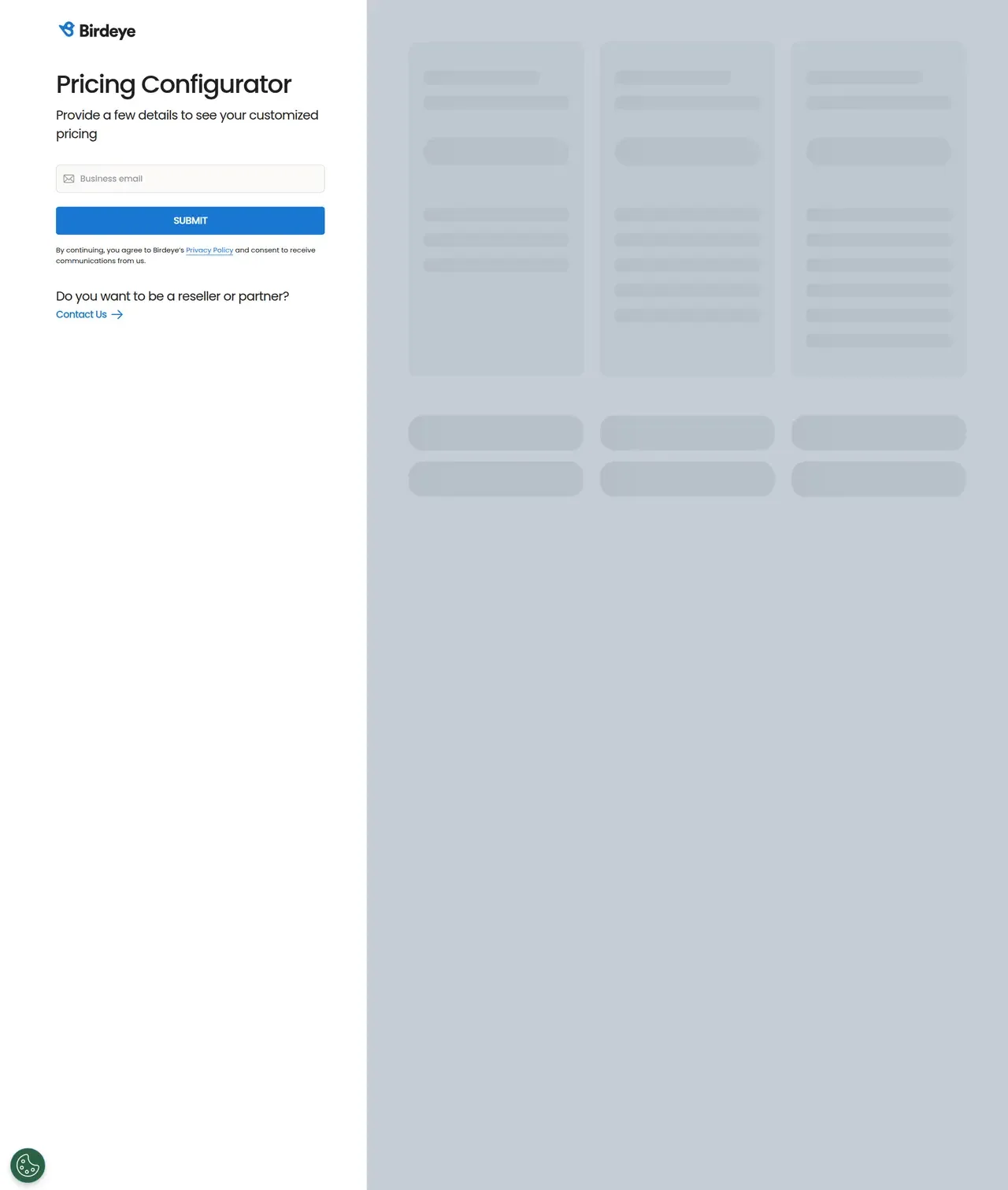
Pricing evidence checked: May 22, 2026. Public pricing pages rechecked: October 18, 2026. Birdeye has changed since then: on October 18, 2026, its pricing page showed a “Get pricing” form that asks for your number of locations, with no plan cards. The Birdeye screenshot below is the May 22 capture.
Scroll to see more columns.
| Pricing question | What the public page showed | What a restaurant owner should ask next |
|---|---|---|
| Is there public starting pricing? | No. On October 18, 2026, the page was a quote form that asks for your number of locations. In May 2026 it showed Starter, Growth, and Dominate plans, without fixed dollar amounts. | Ask for the exact monthly price per location and the minimum contract term. |
| What modules appear tied to plan level? | The October 18 page showed no plan cards. In May 2026, reviews, listings, messaging, social, and chatbot features appeared across plans. | Ask which modules are included and which cost extra. |
| What is still unclear? | Final price, onboarding fees, cancellation terms, renewal terms, and usage limits were not clear from the captured view. | Compare the quote against the weekly workflow your restaurant will actually use. |
Methodology and source handling
Reviato publishes this comparison. The capability descriptions above come from linked official documentation and current Reviato behavior. No matched product trial, comparative quality ranking, complaint-frequency study, or customer outcome study is presented. Ask the same integration, support, and data-access questions of every vendor, including Reviato.
Capability checks are dated separately from historical pricing notes. A changed article date is not a fresh price check. Confirm required source coverage and package access with the vendor before selecting a product.