
Google shows a star rating on the Business Profile, Tripadvisor ranks businesses against others in the same area, and Booking.com weights recent guest scores more heavily. Keep those numbers side by side so you can see what moved and which reviews might explain it.
How hotel reviews differ across the three sites
Scroll to see more columns.
| Tripadvisor | Booking.com | ||
|---|---|---|---|
| Who can review | Signed-in Google users can review places they visit. Reviews are public, with the reviewer’s name visible. | Tripadvisor members can review a stay, meal or visit. | Booking.com emails guests after checkout. They have 90 days to review the stay. |
| What guests see | A star rating on the Business Profile and Google Maps. | Bubble ratings and a popularity ranking relative to other listings in the area. Quantity, recency and quality matter. Consistency helps Tripadvisor assess how well the reviews reflect the experience over time. | Guests give a required overall score from 1 to 10. Since January 2025, Booking.com weights newer scores more heavily within the three-year window. Optional category scores such as Wi-Fi and breakfast stay separate. Booking.com archives reviews after 36 months and recalculates the score. |
| How to ask | Copy the official review link or download the QR code under Get more reviews on a computer. Google prohibits incentives. | Tripadvisor’s hotel guidance suggests asking at the desk, in public areas, in a thank-you note or within 72 hours of checkout. | Booking.com sends its own post-checkout invitation. |
| How to reply | Reply through a verified Business Profile or from Maps on a computer. Google’s review of the reply usually takes up to 10 minutes and sometimes up to 30 days. Flag reviews that break Google’s rules for Google to assess. | Reply through Tripadvisor’s management tools. Keep it brief and professional. Tripadvisor handles removal of reviews that break its rules. | A reply can help future guests understand how you handled the issue. Booking.com’s score guidance describes guest ratings as the inputs. |
Google review links and QR codes
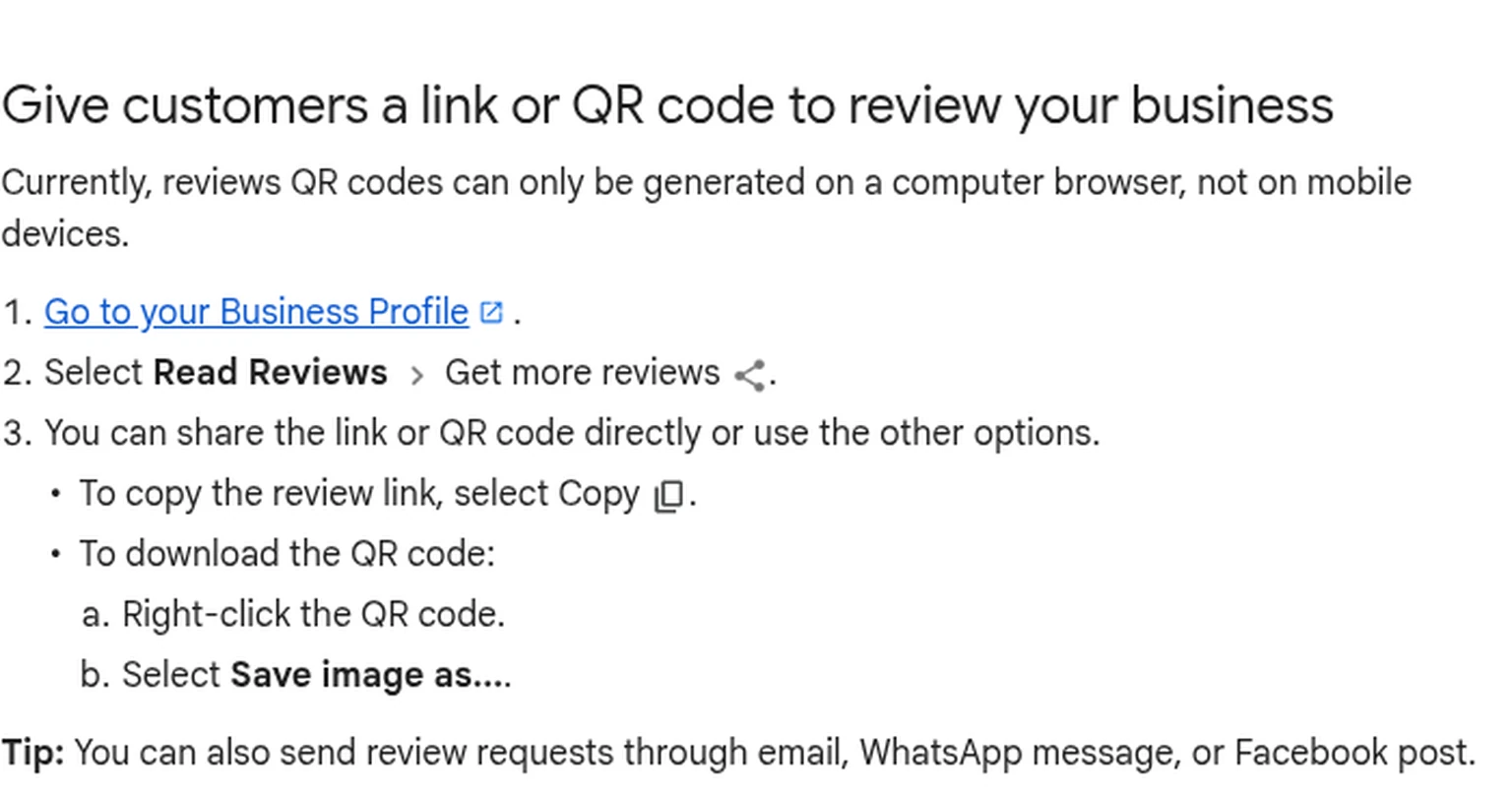
Source: Google Business Profile Help.
Tripadvisor popularity ranking
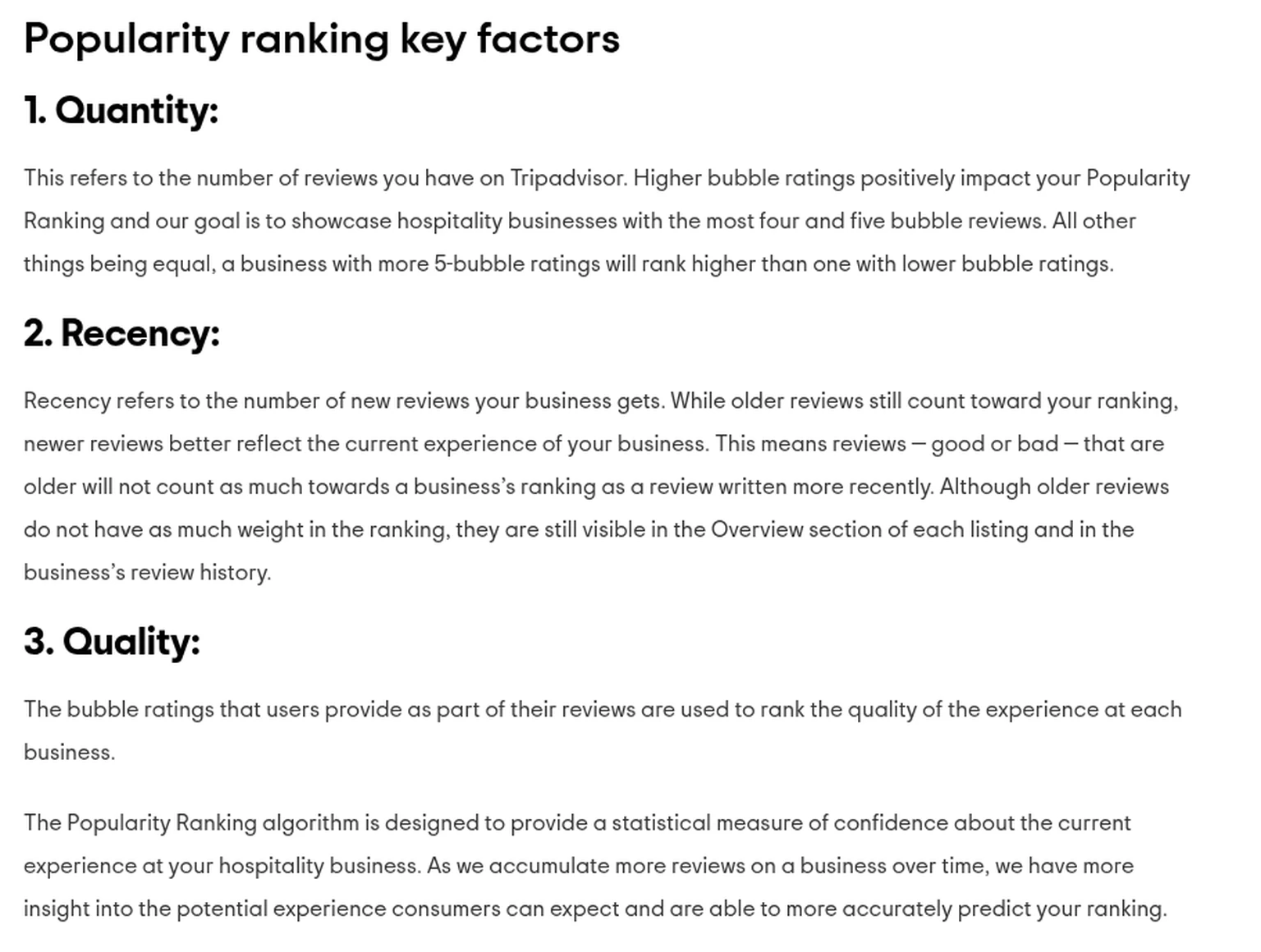
Source: Tripadvisor Business Insights.
Booking.com review scores
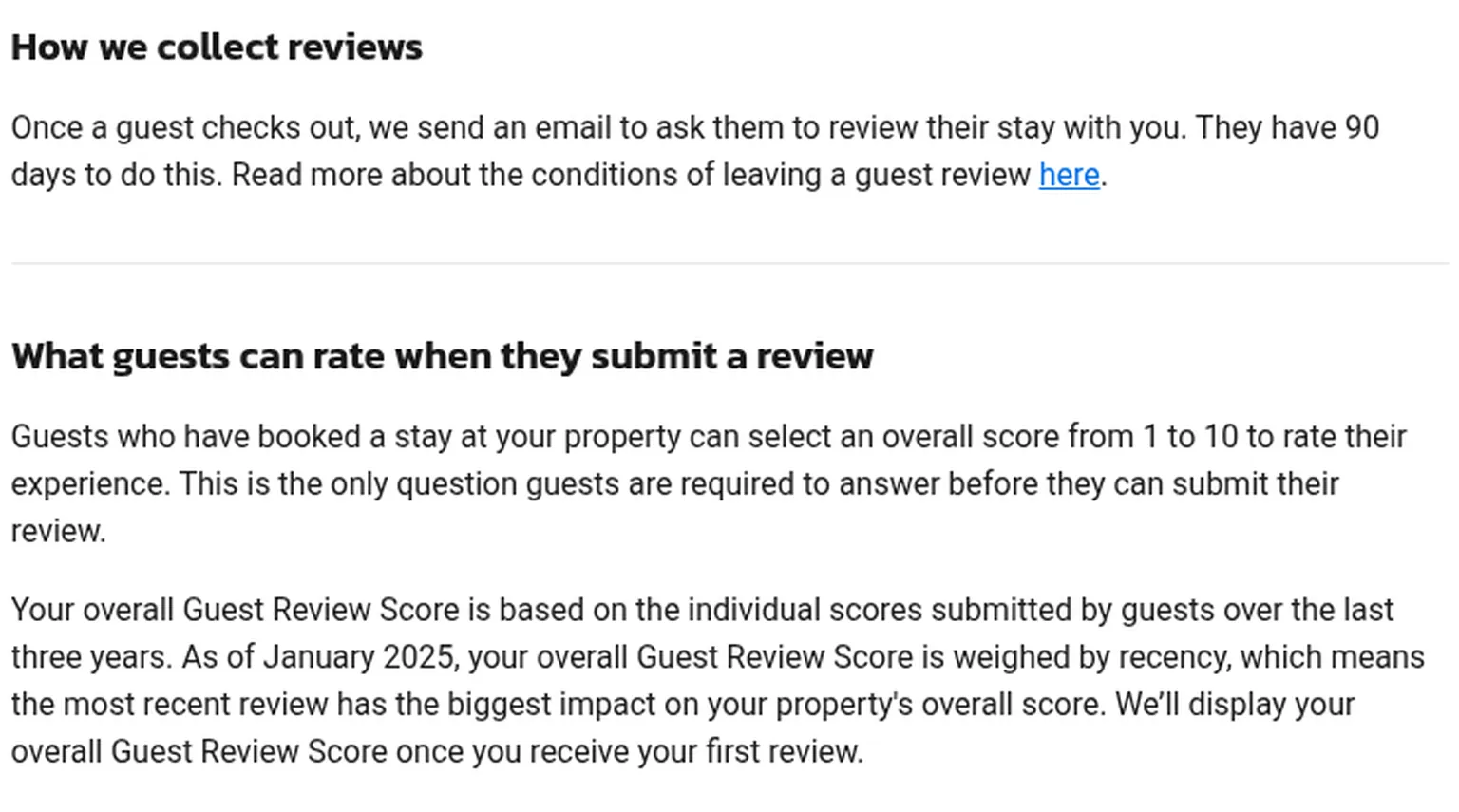
Source: Booking.com Partner Hub.
What to check when your scores diverge
Look at when the reviews were posted and which guests can review on each platform. Your Booking.com score can still include older stays, while your Tripadvisor position also depends on other properties nearby. Read the newest comments on each site and check whether issues such as noise or a slow check-in appear across sources.
Worked example for one hotel
Consider a fictional 24-room hotel checking the same 30-day window. Google has two mentions of a slow check-in across 10 new reviews. Tripadvisor has one across five new reviews, while the hotel has moved down two places in its local ranking. Booking.com has three across 12 new reviews, and its displayed score has moved from 8.6 to 8.4.
The team records the six mentions under their original sources, then reads the comments before raising them with the front desk. If most describe waiting for a room on Friday afternoons, the manager can check room-ready times and arrival records for those Fridays. The comments tell the manager where to look. The ranking and score changes alone cannot establish what caused them.
See review analysis for a repeatable way to count themes. Keep the Tripadvisor ranking factors and the Booking.com scoring rules nearby when checking what moved.
Sources
- Google Business Profile Help on review requests and replies, and Google Maps Help on writing reviews, accessed 19 November 2026.
- Tripadvisor Business Insights on popularity ranking and asking hotel guests for reviews, accessed 19 November 2026.
- Booking.com Partner Hub on guest review scores, accessed 19 November 2026. See also the Partner Hub score guide.
Related pages
See hotel reputation management and Google reviews for restaurants.
What you miss when you check each score on its own
Each platform can make the same front-desk problem look like an isolated comment. Without a shared topic view, the manager has to match those comments by hand every time the review meeting comes around. Reviato keeps the underlying reviews and sources together. See the hotel review demo.